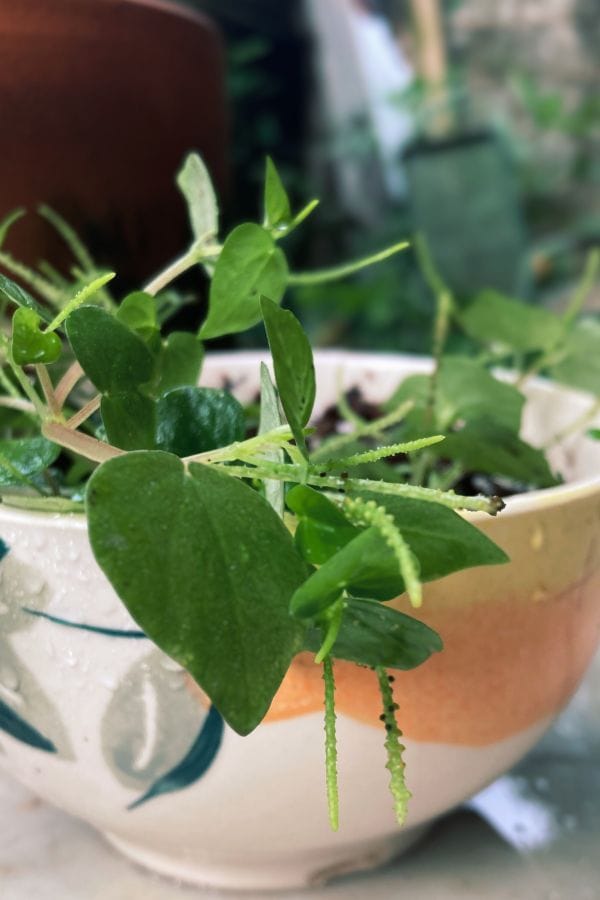
Peperomia pellucida, known across the Caribbean as Shining Bush, Rat Ear, or Man-to-man, is a small tropical herb that is often overlooked as a common weed.
This glossy-leaved plant has a long history of traditional use in the Caribbean and other tropical regions, including as food, tea, and in topical preparations.
In my garden, it grows naturally in shaded areas, often near aloe vera and bay leaf trees. It is easy to recognize by its small heart-shaped leaves and soft, translucent stems.
In this guide, you will learn the benefits of Shining Bush, how to make it as a tea, and how to identify and use it safely at home.
Build a Practical Herb Garden
If you want to grow your own healing herbs at home, starting with a balanced mix makes the process much easier.
If you are growing herbs in pots or a small backyard garden, having a few reliable tools makes planting, pruning, harvesting, and repotting much easier.
How to Identify Shining Bush
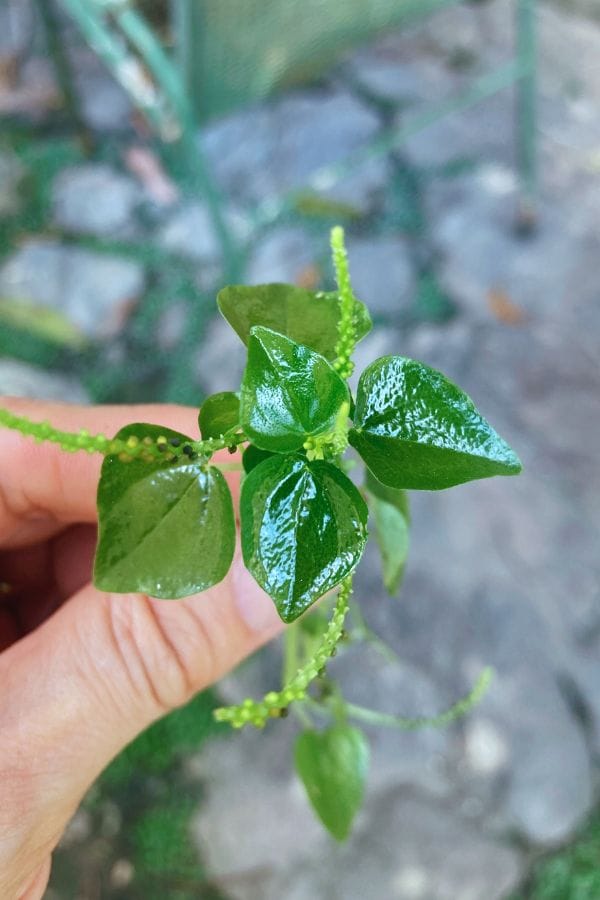
- Botanical name: Peperomia pellucida
- Common names: Shining Bush, Rat Ear, Man-to-man, Silver Bush, Clear Weed
- Appearance: Glossy, heart-shaped leaves; soft green stems that are almost translucent
- Growth: Found in moist, shaded areas; low and spreading
- Native to: Tropical Central and South America, widely naturalized in the Caribbean and Asia
You’ve probably walked past it a dozen times, now it’s time to notice it.
Traditional Uses of Shining Bush
Folk healers and backyard herbalists have used this plant in a variety of ways:
1. Traditional Use as Shining Bush Tea
In Caribbean folk medicine, shining bush tea has traditionally been used for a variety of purposes, including in connection with blood pressure. Research has examined the plant’s compounds and possible biological effects, but traditional use is not the same as proven treatment for high blood pressure. In fact, a Saudi Journal of Biological Sciences study confirmed that Peperomia pellucida acts as a natural ACE inhibitor in hypertensive rats.
2. Traditional Topical Use
In traditional practice, mashed or bruised leaves have been applied topically to the skin. These uses are part of folk tradition and should not be treated as established treatments for arthritis, gout, injuries, or other medical conditions.
Scientific reviews have found Peperomia pellucida to contain bioactive compounds with anti-inflammatory and antinociceptive properties. See full review (2025)
3. Traditional Eye-Related Use
Fresh juice from the leaves is traditionally strained and applied as eye drops or compresses to soothe conjunctivitis (pink eye) or eye irritation. One review on its pharmacology and toxicology supports its traditional use for inflammatory eye conditions. Read full study on ScienceDirect (Elsevier)
Note: This practice should be approached with caution. Always consult a professional before using plant juice in or around the eyes.
4. Traditional Topical Uses
Used for boils, pimples, or wounds, thanks to its natural antimicrobial action.
5. As Food
The tender leaves and stems are edible, often added raw to salads or lightly steamed. It’s juicy, cooling, and nutritious.
Research Highlights: Peperomia pellucida
Blood Pressure Research:
Researchers have investigated Peperomia pellucida and mechanisms related to blood pressure. This research does not establish the plant as a replacement for prescribed blood pressure treatment.
Read study – Saudi Journal of Biological Sciences (2021)
Plant Compounds Under Study:
Reviews describe terpenoids, flavonoids, and other naturally occurring compounds in Peperomia pellucida. Much of the research is laboratory or preclinical, so these findings should not be read as proof that the plant treats inflammatory conditions in people.
Read review – Journal of Experimental Pharmacology (2025)
Antimicrobial Research:
Laboratory studies have examined compounds and essential oils from Peperomia pellucida for antimicrobial and antioxidant activity. These findings are interesting, but they do not establish the plant as a treatment for skin infections or other medical conditions.
Gomes et al., Molecules (2022)
Traditional Eye-Related Use:
Some ethnobotanical sources describe traditional eye-related uses of Peperomia pellucida. I would not recommend putting homemade herbal preparations in the eyes because of contamination and irritation risks.
Teodhora et al
How to Make Shining Bush Tea
Here’s how to prepare a simple herbal tea using fresh Shining Bush from your garden:
Ingredients
- 1 handful of fresh Shining Bush leaves and stems (washed)
- 2 cups fresh water
Instructions
- Rinse the herb thoroughly and gently tear the leaves to release their properties.
- Place in a small pot with 2 cups of water.
- Bring to a gentle boil, then lower to a simmer for 10–15 minutes.
- Strain into a cup and allow to cool slightly.
- Drink warm, 1 to 2 times daily.
Shining bush is well suited to warm, humid gardens and can be grown in containers alongside other herbs that enjoy similar conditions.
See My Herb Gardening Tools →
What Does It Taste Like?
Shining Bush tea has a mild, green, and slightly earthy flavor, not bitter or astringent. It’s light and cooling, with a taste somewhere between baby spinach and cucumber.
If desired, you can sweeten it with a touch of local honey or blend it with lemongrass or tulsi for added depth.
Shining Bush (Peperomia pellucida) FAQ
Peperomia pellucida has a long history of traditional use and contains a range of naturally occurring plant compounds. Researchers have studied its antioxidant, antimicrobial, and other biological properties, but that does not establish it as a treatment for blood pressure, joint, skin, or inflammatory conditions.
To make shining bush tea, use one handful of fresh leaves and stems in 2 cups of water. Bring to a gentle boil, then simmer for 10 to 15 minutes. Strain and drink warm. You can add honey or combine with other herbs like lemongrass for flavor.
Shining bush has small, glossy, heart-shaped leaves and soft, translucent green stems. It typically grows low to the ground in moist, shaded areas such as under trees, near walls, or in garden corners.
There is no well-established standard serving frequency for shining bush tea. If you choose to use it as an herbal tea, be cautious with concentrated or frequent use, especially if you take medication or manage a health condition.
Shining bush tea has a mild, fresh, slightly earthy flavor. It is not bitter and is often described as light and cooling, similar to leafy greens or cucumber.
Yes, it grows well in pots and shaded indoor spaces. It prefers moist, well-drained soil and partial shade, making it suitable for balconies, patios, or kitchen gardens.
Yes. Shining bush is a common Caribbean name for Peperomia pellucida. It is also known as Rat Ear, Man-to-man, Silver Bush, and Clear Weed depending on the region.
Yes, shining bush grows well alongside herbs that prefer partial shade and moist soil. If you are building a herbal garden, combining multiple medicinal plants makes harvesting and daily use more practical.
⚠️ Safety & Precautions
- Generally considered safe in moderation when consumed as tea or food
- Avoid if pregnant or breastfeeding without professional guidance
- If you take prescription medication or manage a health condition, check with a qualified healthcare professional before using concentrated herbal preparations
- Do not put homemade herbal preparations in the eyes; use appropriate medical care for eye irritation or infection
Watch: Shining Bush (Peperomia Pellucida) – Tea, Benefits & Growing Guide
If you are exploring more backyard remedies, moringa is another powerful plant used across the Caribbean for nutrition and daily support.
Learn the difference between moringa seeds vs leaves benefits and which one is best for your needs →
Final Thoughts
Shining Bush (Peperomia pellucida) is one of those familiar Caribbean backyard plants with an interesting mix of culinary use, traditional knowledge, and emerging research. I especially value it as a plant worth learning to identify, grow, and document accurately rather than treating traditional uses as proven medical treatments.
If you’ve seen this plant growing in your yard or near your home, take a closer look. It may be small, but it’s one of the Caribbean’s most trusted traditional herbs.